Want to be in the loop?
subscribe to
our notification
Business News
NEW FOUNDATIONS FOR REAL ESTATE DEALS
These provisions should help revitalise the real estate market by paving the way for investment and mergers and acquisitions. David Lim, managing partner at Zicolaw Vietnam outlines the main provisions in the new laws.
The real estate sector has been an attractive investment field. However, it is also a challenging sector due to restrictions and complicated rules imposed on investors and real estate transactions. It is important to understand the new provisions in laws to take advantage of the investment opportunities provided.
Foreigners buying real estate
Foreign individuals and foreign invested enterprises entering into and doing business in Vietnam are now provided with additional rights to own property. Under the current legislation, foreign individuals are permitted to own one apartment and foreign-invested enterprises are permitted to own multiple apartments in a commercial residential development project.
According to the new laws, foreign individuals permitted to enter Vietnam and foreign invested enterprises are no longer limited to owning apartments. They will also have the right to purchase real estate in a residential development project as well. Note however that foreign individuals and foreign-invested enterprises can only own a maximum of 30 per cent of units in an apartment building and 250 houses in a local area such as a ward.
As with the current legislation, the term of ownership remains at 50 years for foreign individuals and the number of years of operation of a foreign invested enterprise as recorded in the investment certificate.
Foreign ownership of completed construction works for own use
For the first time, overseas Vietnamese and foreign-invested enterprises from all business sectors can purchase completed buildings to use for office buildings, manufacturing and business locations. In the current laws, foreign-invested enterprises are only permitted to lease an office building which it has not constructed.
Presales
The right to sell real estate prior to the completion of construction has been extended to leasing of such properties as well. Under the current laws, developers cannot lease out space which has not been completely constructed. The new laws however states that a maximum of 30 per cent of the total contract value may be collected as the first payment for sales and lease-purchase transactions. Subsequent payments are to be collected in accordance with the construction progress. Foreign developers are not permitted to collect more than 50 per cent of the total contract value before the handover of the real estate property whilst this percentage is set at 70 per cent for domestic developers. Both domestic and foreign developers are not permitted to collect more than 95 per cent of the total contract value before the issuance of the land use rights certificate.
Bank guarantees for residential presales
As mentioned above, the right to conduct presales is preserved. Note however that the sale and lease-purchase of residential houses must be guaranteed by a commercial bank in Vietnam (which is included in the list of commercial banks published by the State Bank of Vietnam) prior to selling or lease-purchasing such residential houses. This has been introduced to provide more protection to buyers who may be left without any recourse in the case where a real estate developer runs into financial difficulty. It is important that this scheme is implemented in an orderly and efficient manner to fully achieve this objective.
Extended permitted business activities
Consistent with the requirement that foreign investors invest in the construction of real estate, foreign investors are currently prohibited from sub-leasing real estate which they have leased. Foreign investors will be pleased to learn that such prohibition will be lifted under the new laws. Owners of unleased space will also benefit from a greater pool of potential lessees.
Two-step licensing procedures
Under current legislation, foreign investors will be issued an investment certificate which serves concurrently as an enterprise registration certificate. However, the new laws require foreign investors in real estate projects to obtain two documents namely an investment registration certificate and an enterprise registration certificate. A foreign investor must first obtain the investment registration certificate to be followed by the enterprise registration certificate. In addition, foreign investors in real estate projects to which the state allocates or leases out land without auction or tendering; and foreign investors in real estate projects with a requirement for conversion of the land use purpose must obtain an in-principle investment decision before being issued the investment registration certificate.
These requirements are similar to what is imposed under current laws except for the requirement of obtaining an enterprise registration certificate. It is expected however that this additional step will be an administrative step only with the enterprise registration certificate to be issued within three Business Days of application. Note further that the time for the various approvals and certificates to be issued has been reduced substantially from around 75 days to around 45 days. If implemented correctly, this is a substantial reduction of time to obtain the necessary regulatory approvals to establish an enterprise to undertake business in Vietnam.
Increased legal capital
Notwithstanding the investor friendly provisions as mentioned above, the new legislation provides stricter requirement in terms of minimum capital. The minimum capital for real estate development enterprises has been increased from VND6 billion (approx. $280,000) to VND20 billion (approx. $940,000). Existing real estate enterprises are required to increase their capital to comply with such requirements by July 1, 2016.
At the same time, foreign investors in M&As should be aware of the new provisions set out below.
Clearer definition of foreign-invested enterprise
Since the Law on Investment 2005 and the Law on Enterprise 2005 were introduced, there has been a long-standing discussion on the status of an enterprise when it converts from a purely domestic firm to a foreign-invested enterprise. This discussion is an important one for foreign investors since there continues to be different provisions and conditions applying to foreign invested enterprises and domestic enterprises. The lack of clarity in the current legislation and inconsistent implementation by various authorities has led to confusion and in some cases, missed investment opportunities. The new laws specify that a foreign-invested enterprise is an enterprise incorporated in Vietnam with 51 per cent or more shareholding held by one or more foreign investors. Furthermore, any enterprise with shareholders holding 51 per cent or more of its shareholding being other foreign invested enterprises or foreign investors will also be a foreign invested enterprise.
Procedures for M&A transactions
For M&A transactions, there are clear provisions which state that there are no requirements in obtaining an investment registration certificate for the foreign investment in the form of capital contribution, purchase of shares or capital in a domestic enterprise. Where the shareholding of the foreign investor in such a domestic enterprise is 51 per cent or more; or the business lines of the domestic enterprise fall in the conditional sectors applied to the foreign investors which includes real estate projects; a registration of such contribution/purchase to the related Department of Planning and Investment is required. The language used suggests a much simpler procedure than what is in place under the current laws. We will need to wait for more implementation ofs regulations on what is required for such registration.
Conclusion
On the face of it, the new laws would increase the opportunities for foreign investors to carry out real estate projects and at the same time and reduce investment cost. Nonetheless, it remains crucial for an investor seeking to conduct a real estate-related transaction to keep up with implementing regulations. Clear implementation guidelines and action is required to ensure that the objectives of the new laws to simplify investment procedures for investors are realised in full.
Source: VIR
Related News
MEMBER CORNER / PROMOTIONS
KNIC EXCLUSIVE GATHERING & NETWORKING 2026: A NEW MEETING POINT FOR INDUSTRIAL INVESTMENT IN HANOI
On October 2, 2026, KN Industrial City (KNIC) will host KNIC Exclusive Gathering & Networking 2026 at the National Innovation Center (NIC) in Hanoi. Building on a series of business networking and investment promotion activities in Ho Chi Minh City and Dong Nai, the event marks a new opportunity for KNIC to connect with businesses, investors, and partners in Northern Vietnam.
MEMBER CORNER / PROMOTIONS
KNIC ENGAGES WITH GOVERNMENT AND HIGH-TECH BUSINESS COMMUNITIES IN CHINA
From Beijing to Shandong, KN Holdings and KN Industrial City are continuing to expand their engagement with government authorities, trade promotion organizations, and high-tech business communities in China. In Beijing, the delegation met with the Center for International Economic and Technological Cooperation under the Ministry of Industry and Information Technology (MIIT), exchanging perspectives on industrial and technology cooperation between the two markets.

VIETNAM ECONOMY INVESTMENT
VIETNAM’S TRADE TOPS $825 BILLION BY MID-SEPTEMBER
Figures released on September 21 showed goods trade reached nearly $55 billion in the first 15 days of September alone, bringing cumulative turnover since the beginning of the year to more than $825 billion. The strong growth reflects robust trade flows, with demand for consumer goods and production inputs remaining high.

TECHNOLOGY
VIỆT NAM'S BUSINESSES MOVE TOWARDS AI AGENTS
Việt Nam’s AI landscape is entering a new phase as businesses move beyond generative AI (GenAI) tools designed to assist human users towards autonomous AI, agentic AI and AI agents that can take action with limited supervision, experts have said. The shift comes as Việt Nam seeks to accelerate science and technology, innovation and digital transformation under Politburo Resolution 57-NQ/TW, issued on December 22, 2024.

GARMENT / TEXTILE
VIỆT NAM TARGETS $48 BILLION IN TEXTILE-GARMENT EXPORTS
Việt Nam’s textile and garment industry is facing both opportunities and challenges amid complex and unpredictable developments in the global market, prompting businesses to improve growth quality, optimise production costs and enhance adaptability in pursuit of an export turnover of about $48 billion this year. The target is considered an important milestone that requires concerted efforts from management agencies and the business community.
INFRASTRUCTURE / CONSTRUCTION / LOGISTIC / PORT
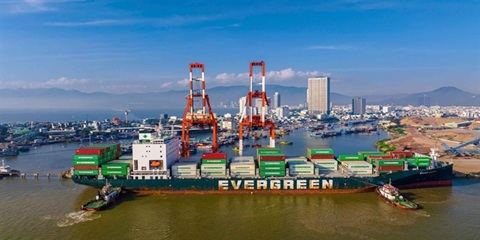
CUTTING LOGISTICS COSTS KEY TO BOOSTING EXPORTS
Reducing costs has become an increasingly urgent priority for import-export activities, particularly logistics costs, a conference in Hà Nội was told on Tuesday. According to Deputy General Director of the Ministry of Industry and Trade's Agency for Foreign Trade, Trần Thanh Hải, import-export activities has remained a bright spot for the economy in recent years, playing an important role and helping drive macroeconomic growth.
Events Sponsors






















